

Join the Conversation




The Institute of Sacred Aesthetics’ Intellectual Ecosystem Directory
Organizations · Built Projects · Thinkers · Podcasts · Publishing Outlets
Download our working map of the people, institutions, and platforms advancing beauty, sacred order, and human-scale urbanism — with links, social handles, and submission notes.
Download The Ecosystem Map
Starting Resource List
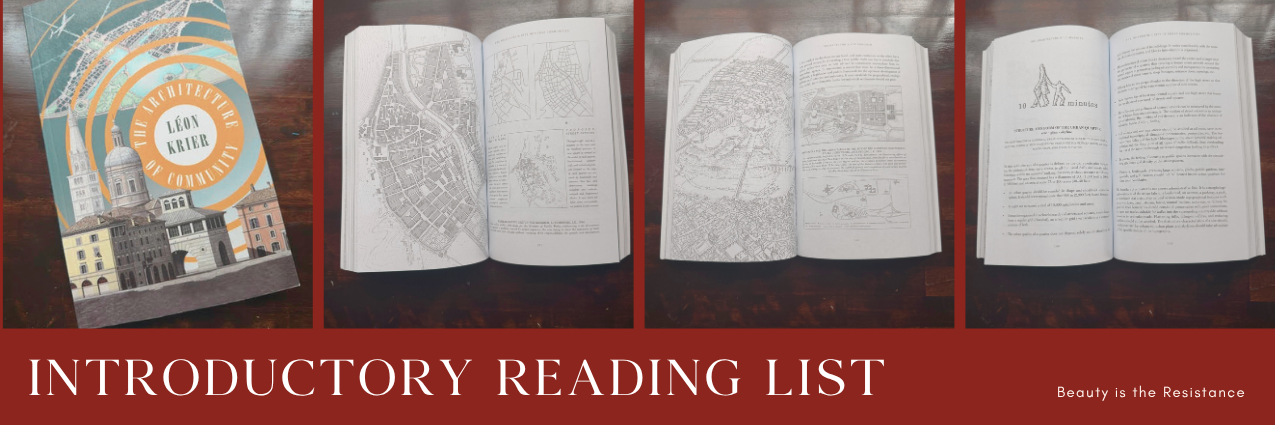
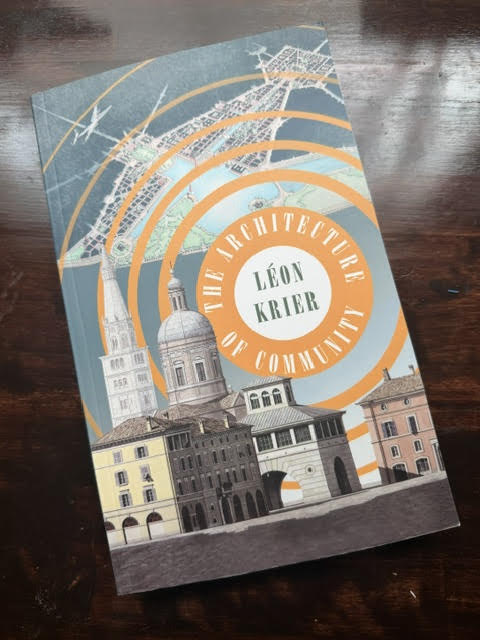
The Architecture of Community — Léon Krier
Krier offers a compelling defense of traditional urbanism, human-scale streets, civic squares, and beautiful public life. The book is valuable for anyone seeking to understand why cities should be built for people, not machines.
The Aesthetics of Architecture — Roger Scruton
Scruton argues that architecture is not merely functional, but a moral and cultural art that shapes how people belong in the world. Its value lies in restoring seriousness to beauty, meaning, and judgment in the built environment.
Beauty — Roger Scruton
This short but rich work defends beauty as a real human need rather than a luxury or preference. It is valuable for reconnecting aesthetics with truth, reverence, love, and the formation of the soul.
A Pattern Language — Christopher Alexander
A foundational guide to designing buildings, towns, and rooms that feel alive, humane, and deeply usable. It gives readers a practical vocabulary for creating places that support real human life.
The Nature of Order — Christopher Alexander
This work explains why some buildings and places possess life, coherence, and beauty while others feel dead or fragmented. Its value is in teaching the deeper principles behind wholeness, harmony, and living form.
The Glory of the Lord — Hans Urs von Balthasar
Balthasar’s masterpiece places beauty at the center of Christian theology, showing how divine glory is perceived through form, revelation, and love. Its value is in restoring beauty as essential to how we know God.
The Death and Life of Great American Cities — Jane Jacobs
Jacobs reveals how vibrant cities depend on mixed uses, dense neighborhoods, active sidewalks, and local human relationships. Its enduring value is showing how ordinary city life creates safety, culture, and community.
Cities for People — Jan Gehl
Gehl makes the case for designing cities around walking, gathering, seeing, and human movement. This book is valuable because it translates humane urbanism into clear, practical design principles.
The Beauty of the Infinite — David Bentley Hart
Hart presents beauty as the radiant expression of divine peace, abundance, and being. Its value is in offering a theological vision where beauty is not decoration, but a revelation of God’s infinite generosity.
The City: An Urban Cosmology — Joseph Grange
Grange explores the city as more than infrastructure, presenting it as a symbolic, spiritual, and communal reality. Its value is in helping readers see urban life as a reflection of human meaning, order, and sacred imagination.